
This guide breaks down where your money should go in the first weeks of Probably Stolen — comparing what you put into buying stock, production, and expansion against how fast each one pays you back. These numbers come from Endless Deficit (Challenge mode) pricing, and my examples ignore extra discounts and event modifiers. The opening timeline uses the Apprentice start with tutorials kept on; if you picked another start, adjust the day markers to your own pace and quoted prices.
How Difficulty Changes Your Priorities
On Easy and Normal, retail gets a default markup and both purchasing and operating costs run lower, so pushing more goods through your shelves can pay back faster. On Hard and Challenge, there is no default retail markup — you have to pay closer attention to bulk-buy discounts, event premiums, and the value you add through processing.
Where to Start
One solid opening path is to build capital through trading and scavenging, then top up income with appraisal, and only after that pick a production business based on the raw materials, power supply, and sales channels you actually have. If you start as a Water Trader, Chemist, or another profession with dedicated equipment, you can also begin from your own industry instead.
Splitting Your Starting Funds
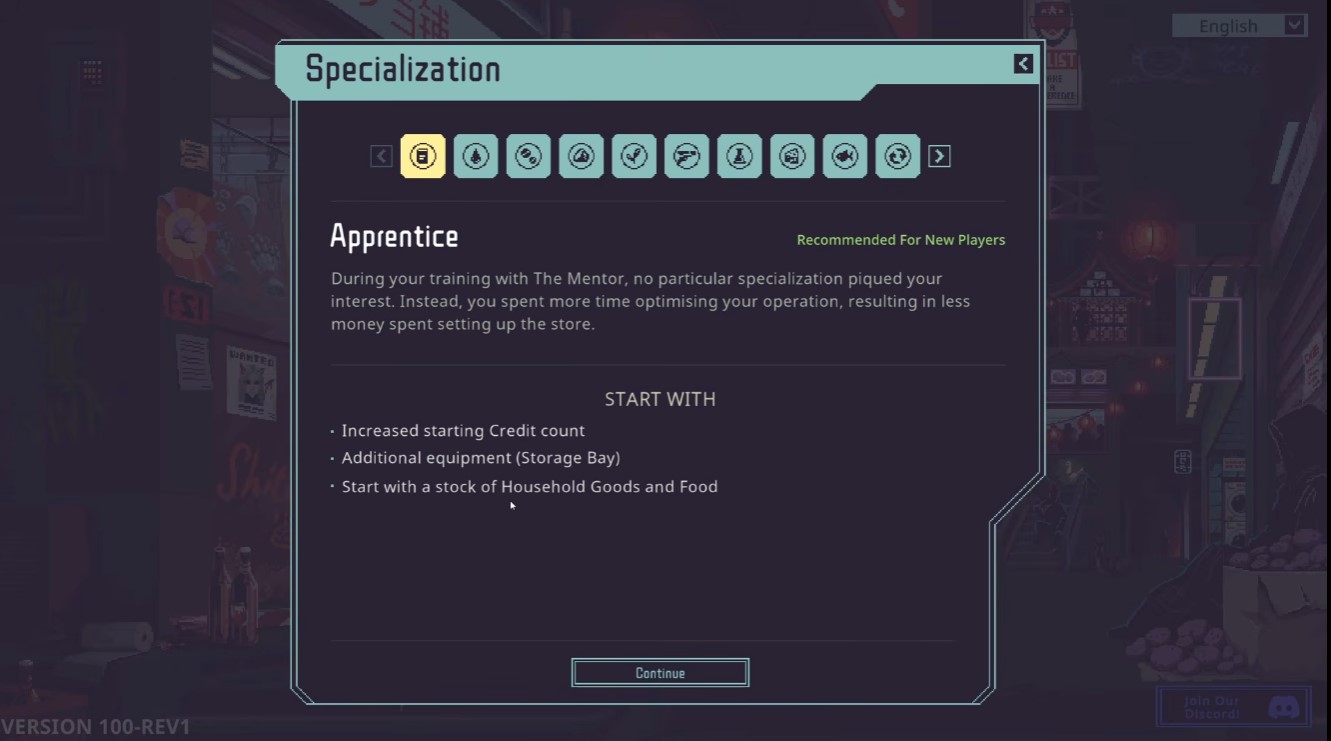
An Apprentice start gives you 550 credits, and the first rent payment is 200. Set aside rent and nightly fees first, then divide what remains between stock budget and investment budget. When cash is tight, compare how quickly each investment returns before committing. A steady sales channel makes it worth expanding stock; if you already hold cheap raw materials, production equipment may be worth buying early.
For replays where you want to trim expenses, Alert at 2 points plus Sawyer’s Hand at 1 point is an option. If startup funds matter more to you, take Savings for an extra 150 credits at the start.
Apprentice Opening Timeline
- From Day 2: With a backpack and free slots, use the first two nights to scavenge and restock. A new save that kept tutorials gives you the first 10 searches free of minor injury and the first 20 free of major injury. Whether to sell what you find or keep it for your machines depends on your near-term cash and material needs.
- From Day 5: Adjust what you put on display based on whether you’re short on stock or sitting on excess.
- Day 6: Decide whether the first furnace is worth buying — the first offer comes in at 180 credits.
- Day 7: Get ready for the first rent payment.
- Day 8: After the appraisal committee visits, weigh joining, buying stock, and buying a furnace against their payback. The membership fee is 255 credits.
Sales Channels and Bargaining
The default display cabinet only assigns buyers to one ordinary product category. When you want to clear inventory, concentrate display value in the category you most want to move. If your shop appeal is below 100, restore appeal first, then adjust sales channels through your display.
A display valuation of 145 in a category can draw mid-tier buyers. From Day 14, most categories reach the high-tier buyer threshold at 350, with daily goods at 300. Whether it’s worth restocking to hit a threshold depends on whether you can actually sell the extra stock. When you’re short, lean toward attracting suppliers; when you’re overstocked, lean toward pulling in buyers.
Bulk discounts should be judged against your inspection skill and how fast you can move goods. If you’re sitting on stock or rent is due, conceding margin to the right buyer helps you recover cash. When you can’t sell in time, a bulk-buying merchant is another exit — his discount is 25%, and other difficulties discount less. Hard bargaining raises per-deal profit but affects trade reputation. Skip the haggling on small transactions, and factor long-term relationships with important buyers or suppliers into your returns; reputation loss is 2x on Normal difficulty.
Appraisal: An Income Line That Ties Up Little Capital
Appraisal orders don’t require you to buy stock first, which makes it a good way to add income when capital is low. Joining costs 255 credits. Keep a display slot free for your certificate so it can attract appraisal customers.
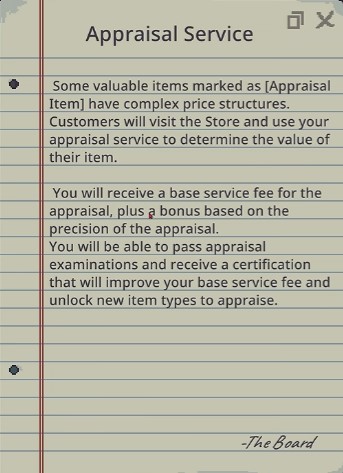
A junior appraiser who accurately values a 300-value item earns 65 per order — four orders cover the membership fee, before shop costs are spread in. When weighing payback time, also watch how often customers actually arrive. Before upgrading, compare the upgrade cost, your current order income, and how familiar you are with the new appraisal items.
Furnace: First-Purchase Discount and Ongoing Costs
The first furnace is 180 on Day 6 and comes with a 50-charge energy battery, two units of flux (basic), and other supplies. The Doctor’s regular new furnace is 400. Running a modless furnace with two pieces of scrap metal at 10 credits each and selling finished goods at full price, gross value added is 22 per batch without flux. The first two batches use the gifted flux for 30 each; the gifted power runs six batches, for cumulative gross value added of 148 — still short of the 180 furnace price.
The first purchase pays back more easily when you have cheap scrap, a buyer for the material, and follow-up power; buying raw material at high prices or repeatedly replacing batteries stretches the payback. Compare buying the furnace against keeping that capital in stock, too.
Brewing: Berry Quality and Material Cost
Unlocking the retired brewer usually costs 400. A small trial batch lets you see the material situation and sales before deciding whether to add an aging device. The figures below assume a retired supplier markup of 45%, fresh bottles and materials each batch, basic water, and ordinary yeast, with the finished product ready in two nights.
| Berries Used | Material Cost | Finished Value | Gross Difference |
|---|---|---|---|
| One ordinary berry | 95 | 100 | 5 |
| One small berry | 95 | 125 | 30 |
| Two ordinary berries | 115 | 125 | 10 |
| Two small berries | 115 | 175 | 60 |
At these prices, small berries give the higher difference; actual returns still depend on buyer budget and final sale price. The gross differences above don’t spread in the 400 referral fee or shop costs during the wait. Quality water and pure water help the wine’s quality equally, so if you have quality water on hand, you usually don’t need to burn the pricier pure water. If you use a cheap water source or grow your own berries, recalculate against your own costs.
The retired supplier visits weekly, so size your batches around the good materials you actually get. When cash is tight, sell finished wine to recover funds — don’t lock up capital waiting on aging.
Water Line: Startup Cost and Water Prices
For an Apprentice, filling out water resource trading, ditch water direct supply, and rust water direct supply comes to 1800 total with no other discounts; later machine and consumable purchases are separate. Before investing, compare that outlay against how fast your current business returns cash. A Water Trader start can use existing tools to get by. The starting Hydra Tech micro water purifier processes up to 7.5 liters — factor remaining durability into your income budget.
Water body value per liter: basic water 40, quality water 60, pure water 80 credits, containers extra. Before purifying, compare the added price difference against consumables and the time your money sits; when cash is short, sell at your current grade first.
Water Collector: What a Second Unit Adds
At base performance, one unit produces 850 ml per night and two together produce 1360 ml — so the second unit only adds 510 ml. When expanding, count battery, container, and required mod costs separately. If both units make pure water and you sell all of it daily at valuation, the second unit adds roughly 40 credits of water value per night. At a retired supplier price of about 508, that’s roughly 13 nights to pay back the machine price alone, with setup costs and sales waiting on top; the Doctor’s regular quote of 700 pays back slower.
If you can’t sell all the finished water, look at your sales channel first; if water quality is lacking, compare upgrading an existing machine’s mod against the price difference it can add.
Power Investment When Expanding
The charger’s regular Doctor quote is 300. With power service on and no commercial-grade power unit upgrade, a rechargeable battery only returns 3 energy per night;
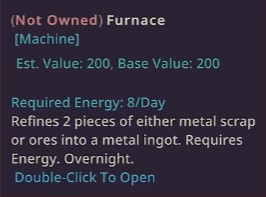
A basic furnace consumes 8 energy per night, so factor in battery rotation or another power source when investing. Enabling power service just for a production line adds an electricity fee that rises with the day count — days 1–9 are 10 credits per night. If your shop already has power on, focus on comparing the new hardware and energy costs.
Nightly service fees must be paid from cash on hand — that night’s production or sales income can’t cover it in advance.
Early Risks and Tradeoffs
Normal goods and appraisal give relatively steady income. Stolen goods, contraband, and fakes can pay more, but when buying, count processing costs, potential losses, and your existing contacts together; a criminal record after selling can still linger. If you meet a suspicious identity, confirm with game information and tools — bargaining reactions can’t be used to weed out modified people. Once scavenging protection runs out, decide your number of searches based on your treatment reserves.
Midgame: Business License and Expansion Budget
Start budgeting for the business license from Day 24. The trade committee official first visits on Day 38 to process it, and from Day 45 unlicensed players must handle follow-up requirements weekly. The normal purchase price is 3000 credits. Trading goods for a deferral can help short-term cash flow, but if you plan to run long-term, the license budget still belongs in your plans.
Full Payment or Mortgage: Watch Your Steady Returns
Buying the shop outright: the price is 36000 for the first 50 days, then rises 100 per day from Day 51, capped at 56000. Start setting aside shop funds mid-game; if expansion delays your purchase, compare the added returns against the higher price and rent you’ll pay. Cash out inventory before buying. Once you’ve saved the full amount, you can buy on the landlord’s rent day directly — no need to pay that period’s rent first.
Mortgage: at a 36000 price, the down payment is 7000, weekly 2370 for 16 weeks, for a total purchase outlay of 44920, plus prior rent and daily costs. The loan shark’s first introduction appears once your cash reaches the down payment. The formal mortgage offer comes on a later rent day and requires that you’ve met the loan shark, haven’t declined the mortgage, and have cash at 2x the current down payment. In this example you need 14000 cash first, with 7000 actually deducted at signing.
Compare your last week’s returns minus necessary restocking and daily costs (excluding rent) against this run’s weekly payment. The weekly payment replaces rent — don’t double-count it. If remaining cash is short or swings a lot, keep saving for full payment instead. Signing keeps the existing rent countdown, so watch the due date of your first weekly payment when arranging funds.


