
Protein and Carbohydrate come from processing Bio Seaweed in the Forge, which unlocks at level 10. To farm Bio Seaweed: wait until nighttime, turn off your flashlight, and defeat the creature that attacks you in the water — each kill drops 100 Bio Seaweed . Alternatively, clear points of interest (POIs) with heavy creature spawns. The Forge requires power and fresh water to operate. Place Bio Seaweed inside, and Protein and Carbohydrate drop on the other side — both are essential for the Food Processor.
Why Protein and Carbohydrate Matter More Than You Think
The Food Processor is your nutrition lifeline in The Last Caretaker, and it runs on exactly two inputs: Protein and Carbohydrate. If you are reading this because your processor has been sitting idle while your hunger bars drain, I have been there.
The mistake most players make is treating these resources as rare finds. They are not. The entire production chain is a loop: hunt at night, collect Bio Seaweed, feed the Forge, stock the processor. Once I mapped this route, my food shortage problem disappeared permanently.
Step 1: Farming Bio Seaweed Without Wasting Daylight
Bio Seaweed are the only ingredient you need to worry about. Here is the farming loop I use every in-game night:
- Wait until nighttime — do not start this during the day.
- Turn off your flashlight — this is the trigger condition.
- Enter the water — a creature will attack you.
- Defeat it — each kill drops exactly 100 Bio Seaweed.
The same drop rate applies when clearing points of interest. If you prefer an active approach over waiting for an ambush, visit any POI with dense creature spawns and farm them there. The yield is identical: 100 Bio Seaweed per creature.
Tip: I keep a dedicated nighttime route with three water access points. By the time I finish one loop, the next night cycle is ready. This keeps my Bio Seed stock above 2,000 at all times.
Step 2: Unlocking and Operating the Forge
You cannot process Bio Seaweed until you reach level 10 and unlock the Forge. This is a hard requirement — do not waste time farming seeds beforehand if you are below this level.
Once the Forge is available, the operating sequence is rigid:
- Power the Forge — verify it has electricity before anything else.
- Add fresh water — the Forge consumes water as part of the processing cycle.
- Place Bio Seaweed inside — load as many as you have.
- Collect from the output side — processed items drop on the opposite end.
If the Forge is not producing, check power first, then water. In my testing, those two failures account for nearly every “broken” Forge report I see from other players.
Warning: Do not leave Bio Seaweed in the Forge overnight without confirming both inputs are active. You will lose the seeds with nothing to show for it.
Step 3: Collecting and Routing Protein and Carbohydrate
After processing, the Forge outputs both Protein and Carbohydrate simultaneously. Walk to the output side and collect everything before starting another batch.
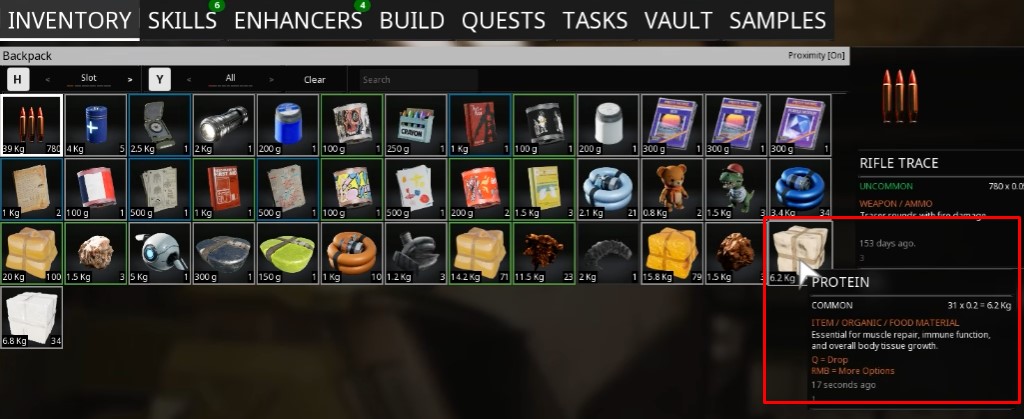
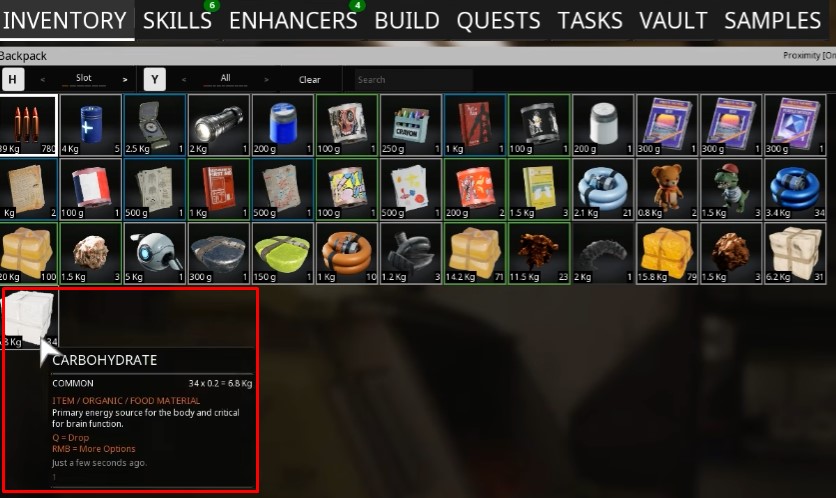
These two items feed directly into the Food Processor. That is the entire loop:
| Resource | Source | Destination |
|---|---|---|
| Protein | Forge (from Bio Seaweed) | Food Processor |
| Carbohydrate | Forge (from Bio Seaweed) | Food Processor |
| Bio Seaweed | Night creatures / POI clears | Forge |
The system is self-sustaining once you have the route memorized. Night hunt for seeds, process them in the Forge, stock the processor, repeat. Your only bottleneck is how many creatures you can kill per night cycle.


